Texas summer heat is hard on everything, and your parking lot takes more punishment than almost anything on your property. If your asphalt looks cracked, soft in spots, faded, or just generally rough, the Texas sun has likely been doing work on it for years. Understanding how summer heat damages parking lot asphalt is the first step toward protecting your investment and keeping your property looking professional year-round. Here’s what’s actually happening to your pavement when temperatures climb above 100 degrees.
The Science Behind Heat and Asphalt Damage
Asphalt is a flexible material by design. It’s made from aggregates (gravel and sand) bound together by a bitumen binder, which is a petroleum-based material that becomes more fluid as temperatures rise. When asphalt gets hot, the binder softens. When it cools, it hardens. Over hundreds of heat cycles in a Texas summer, this expansion and contraction cycle slowly breaks down the material.
In The Woodlands TX and surrounding areas, summer pavement surface temperatures regularly reach 140 to 160 degrees Fahrenheit, even when the air temperature is “only” 95 to 100 degrees. At those surface temperatures, asphalt softens significantly. Heavy vehicles create ruts and depressions. The surface becomes vulnerable to cracking when it cools overnight. UV radiation degrades the binder, causing the asphalt to oxidize and become brittle over time.
Types of Damage Texas Summer Heat Causes
Surface Cracking
The most visible form of heat damage is cracking. Longitudinal cracks run along the length of the pavement. Transverse cracks run across it. Alligator cracking creates a pattern that looks like a reptile’s skin and indicates more severe structural distress. All of these are accelerated by high temperatures, UV exposure, and the freeze-thaw cycles (yes, even Texas gets cold enough to matter) that happen in winter.
Raveling
Raveling is when the aggregate and binder separate, causing the surface to become rough and grainy. You’ll see it as loose gravel appearing on your parking lot surface. It’s an early sign of oxidation, which happens when the sun degrades the bitumen binder. Raveled surfaces are harder to keep clean, look unkempt, and accelerate further deterioration.
Rutting
In severe heat, heavily trafficked areas can develop ruts, which are depressions that follow tire tracks. This is most common in commercial parking lots where delivery trucks and heavy vehicles make repeated passes over the same spots. Rutting collects water, which accelerates freeze-thaw damage and makes the surface hazardous.
Fading and Oxidation
Even if you don’t see cracks yet, UV radiation from the Texas sun oxidizes the binder in your asphalt, causing it to fade from black to gray. That faded color is a sign that the binder is drying out and becoming brittle. Brittle asphalt cracks much more readily under traffic loads and temperature changes. A gray parking lot is a parking lot that’s already in decline.
How Sealcoating Protects Your Asphalt from Summer Heat
The most effective defense against Texas summer heat damage is sealcoating, applied on a regular schedule. Sealcoating is a protective layer applied over existing asphalt that does several things simultaneously:
- Blocks UV radiation: The sealer acts as a shield against the sun’s UV rays, slowing down oxidation and keeping the binder flexible longer.
- Prevents water infiltration: Sealcoating fills surface voids and creates a barrier against water penetration, which reduces both summer damage and the freeze-thaw damage that follows in winter.
- Extends asphalt life: Industry data consistently shows that properly maintained and regularly sealed parking lots last significantly longer than unsealed pavement. The cost difference between maintaining asphalt and replacing it is dramatic.
- Restores appearance: Sealcoating brings back the deep black color of fresh asphalt, which projects a professional image to customers and visitors.
For commercial properties in The Woodlands TX and the Houston metro area, the recommended sealcoating cycle is every two to three years for heavily trafficked lots and every three to five years for lighter-use properties. The exact schedule depends on traffic volume, sun exposure, and the condition of the existing surface.
When to Act: Before July vs. After
If you’re going to schedule sealcoating or significant pavement work, the window before peak summer heat is the best time. Here’s why:
- Sealcoating requires temperatures above 50 degrees Fahrenheit to cure properly. Spring provides that without the extreme heat.
- Getting work done before July means your pavement is protected before the most damaging months of the year.
- Scheduling in spring avoids the end-of-summer rush, when many property managers realize too late that their parking lot has deteriorated further than expected.
That said, if your lot is already showing significant damage, waiting isn’t the answer. Cracks that are left open allow water to penetrate to the base material, which causes structural damage that no amount of surface sealing can fix. Crack filling and sealcoating done in late spring or early summer is still vastly better than doing nothing.
Crack Filling: The First Step Before Sealcoating
Sealcoating is most effective when it’s applied to a surface that’s been properly prepared. That means filling cracks before sealing. Crack filling involves routing out the crack (cleaning and widening it to create better adhesion), then applying a hot-applied rubberized crack filler that seals the crack against water infiltration and remains flexible through temperature changes.
Skipping crack filling and just applying sealcoat over existing cracks is a common mistake. The sealer will bridge the crack initially, but it will fail quickly because it lacks the depth and flexibility to handle the movement. Proper crack filling first, then sealcoating on top, is the sequence that actually protects your pavement.
Keep Your Striping Visible Year-Round
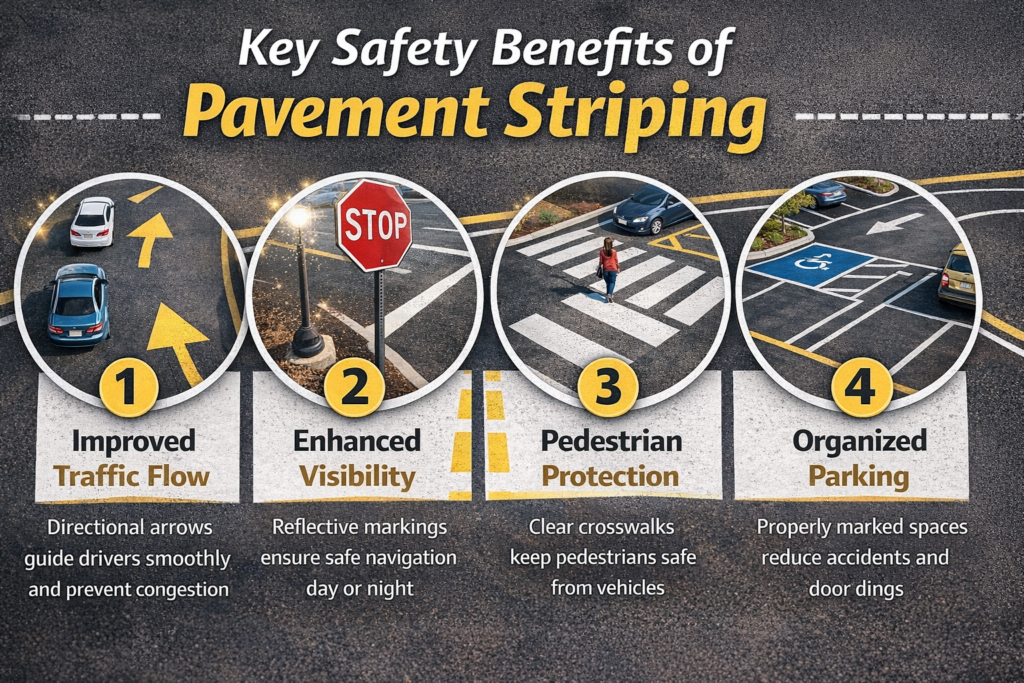
Heat, UV radiation, and sealcoating cycles all degrade parking lot striping. Faded lines are both a safety issue and a compliance issue, particularly for ADA-required accessible spaces. After sealcoating, fresh parking lot striping restores visibility and keeps your property compliant.
At Linewise Solutions, we sequence our work correctly: prep, crack fill, sealcoat, re-stripe. Each step builds on the previous one, and the end result is a parking lot that looks sharp and performs well through the Texas summer and beyond.
Protect Your Parking Lot This Summer
Texas summer heat isn’t going to get less intense. The question is whether your parking lot is prepared for it. Whether you need a full sealcoating and striping package or just crack repair and line refresh, Linewise Solutions serves commercial and industrial properties throughout The Woodlands TX, Spring TX, Conroe TX, and the greater Houston area.
Call us at (346) 444-9111 or visit our contact page to schedule an assessment. We’ll take a look at your current pavement condition, explain exactly what it needs, and get you on the schedule before the summer damage gets worse.
Protect your pavement with our professional sealcoating services or explore our full range of parking lot striping.