When it comes to design and optimization the parking places are most of the times ignored. Yet, a line layout that has been done well can enhance capacity, traffic and safety by many folds without even an increase in the physical space. It can be a commercial parking lot or residential complex, as well as a public facility; however, smart line marking is one of the cheapest methods to ensure maximum efficiency.
Learning the Basics of Parking Layout
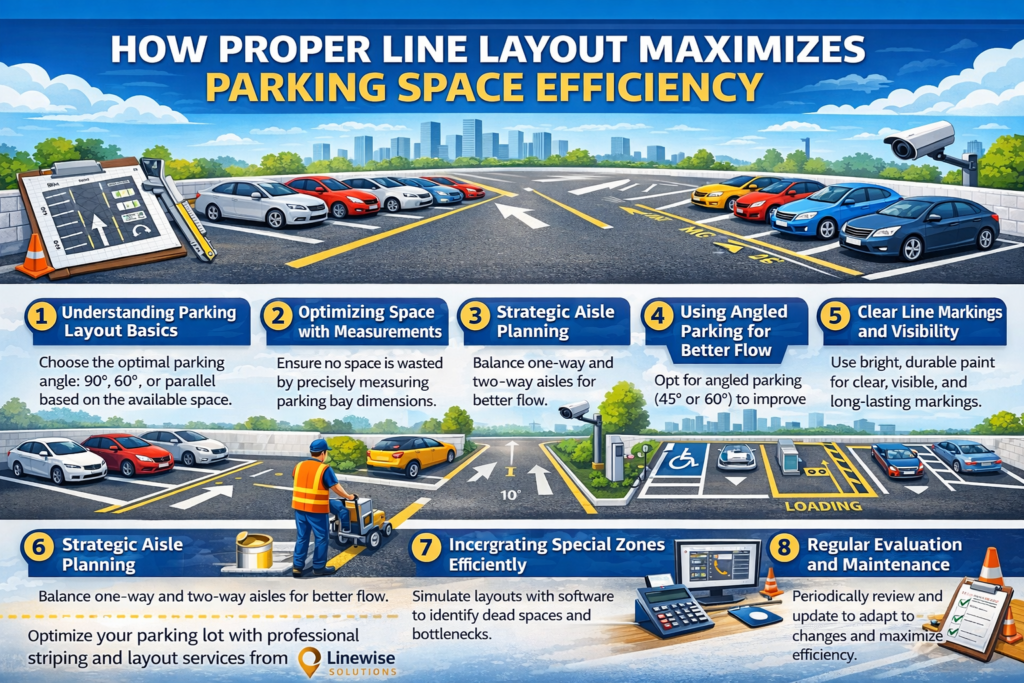
Essentially, parking efficiency relies on the parking distribution of vehicles within a space. The most widespread layouts are:
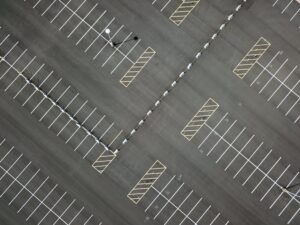
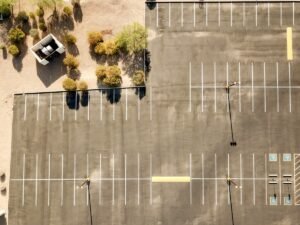
- 90-degree parking (at right angles): It maximizes the vehicles but has to have wider aisles.
- Parking at 60 degrees (angleda): It is less difficult and enhances traffic movements.
- Parallel parking: This one is the smallest in space but helps when there is a lot of restriction.
The appropriateness of the layout is determined by the space available, anticipated traffic and convenience to users.
| Parking Layout Type | Space Efficiency | Ease of Maneuvering | Traffic Flow | Best Use Case |
|---|---|---|---|---|
| 90° (Perpendicular) | High | Moderate | Moderate | Large commercial lots |
| 60° Angled | Medium-High | Easy | Smooth | Busy retail areas |
| 45° Angled | Medium | Very Easy | Very Smooth | High-turnover parking |
| Parallel | Low | Moderate | Smooth | Streets, tight spaces |
| One-Way Aisle | High | Easy | Very Smooth | Compact parking lots |
| Two-Way Aisle | Medium | Moderate | Moderate | Flexible access areas |
Space: Measuring and Maximizing the Space
Minor changes in line spacing may count for a lot. Parking bays which are properly measured will ensure that:
- There is no wastage of space between vehicles.
- Cars are comfortable and do not overlap.
- Majority of slots are made as much as possible without reducing usability.
It should be done in standard sizes, although a slight modification depending on the trends in the automobile (ex: compact vs SUVs) can be used to even enhance efficiency.
Strategic Aisle Planning
Parking slots are not greater than aisles. The bad design of aisles may cause congestions and ineffective use of space.
- The one-way aisles have the benefit of having smaller lanes and increased parking spaces.
- Two-way aisles are more flexible and wider.
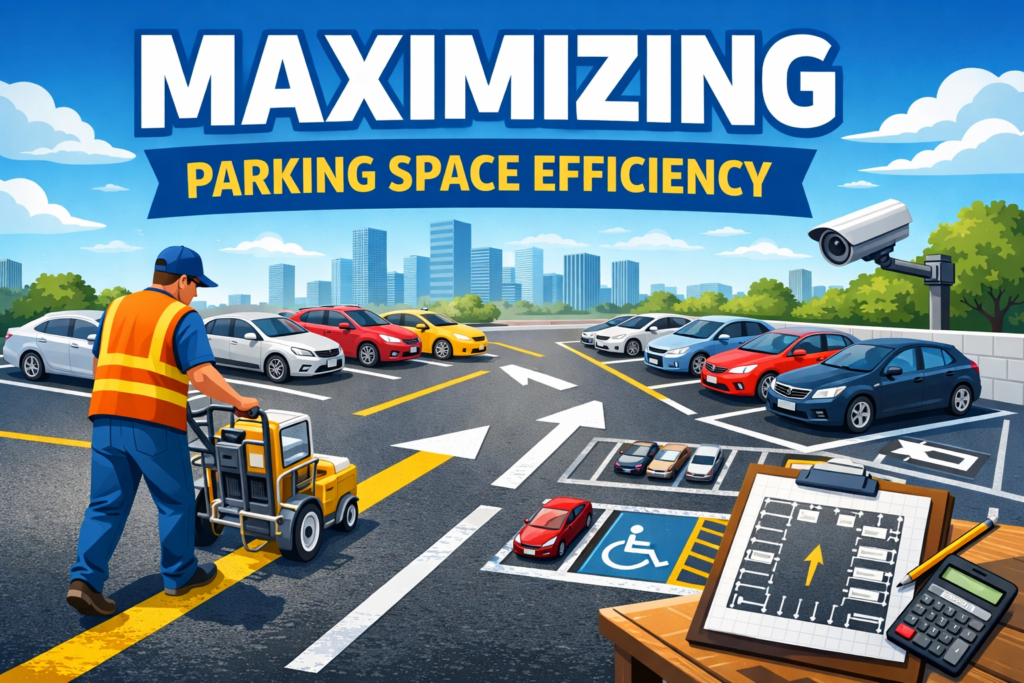
- Directional arrows are clearly marked which minimizes confusion and enhances flow.
The aisle width and the parking density should be balanced in order to maximise efficiency.
Parking With Angled to Improve the Flow
Parking patterns to be angled work well especially in busy places. They:
- Minimise the time required to park.
- Reduce the chances of collisions.
- Enhance free flow in and out.
This design is best when it is coupled with one-way traffic systems.
Clearness and Visibility of the Line Markings
Dilapidated or indistinct lines may result in ineffective parking and wastage of space. Good quality markings guarantee:
- Parking by drivers is within limits.
- Regular distance between cars.
- Deeper exploitation of each slot.
Durable paint and generally frequent maintenance can be used to maintain clarity with time.
Special Zones that are efficient to incorporate
Parking lots like handicap parking, loading zones, and electric vehicle spots should be incorporated in a way that does not interfere with the general traffic. The right location will provide accessibility, as well as, capacity.
Taking Advantage of Technology and Planning Devices
Simulations software is also commonly used to test parking layouts nowadays. These tools help identify:
- Dead spaces
- Traffic bottlenecks
- Possessions of extra slots.
Planning ahead will help to avoid expensive re-striping.
Continuous Testing and Processing
The most desirable layouts require a regular assessment. Efficiency can be affected by alteration in the sizes of vehicles, patterns of traffic or even usage. The parking area will be maintained in a good condition through regular checks and updates.
Improve your parking lot with expert striping and layout solutions from Linewise Solutions. Our team ensures precise markings, better traffic flow, and maximum space utilization. Whether you need a new layout or re-striping, we help you create safer, more efficient parking areas that enhance both functionality and customer experience.
Conclusion
The issue of parking space optimization is not increased area but increased smartness. Effective line layout is very important in attaining this by enhancing organization, safety, and capacity. Any parking area can be developed into a very efficient space, which can fulfill the present and future needs with proper planning and frequent maintenance.