
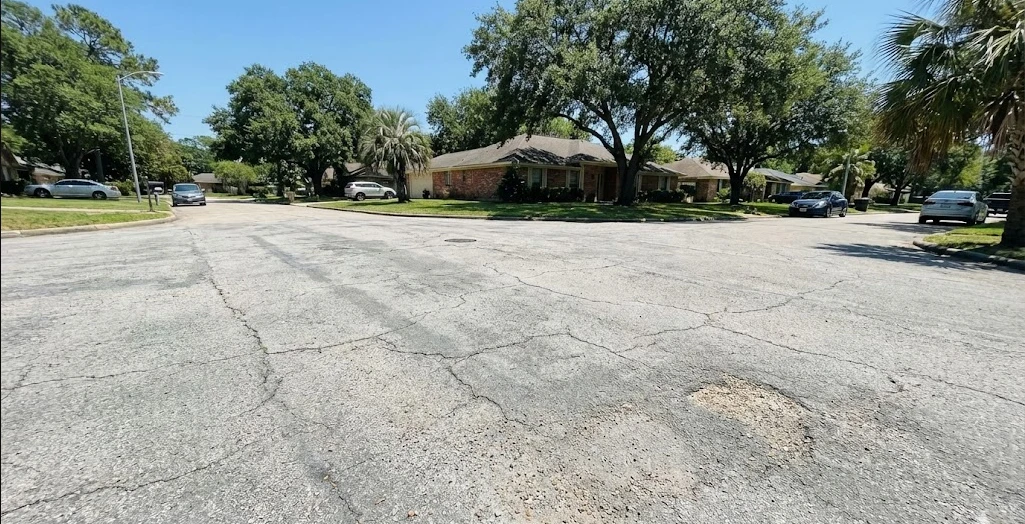
One of the best advantages is that you can spend most of your year in Houston because of warm weather, however, it is also one of the reasons why your asphalt surfaces work harder than you may assume. Local weather conditions may gradually destroy the driveway, parking lots, and personal roads due to extremely hot weather, sudden rains, and even tropical storms.
Here we give information on how weather damage on asphalt occurs in Houston, what to look out, and how you as a homeowner can prevent future suffering before minor issues escalate into costly details.
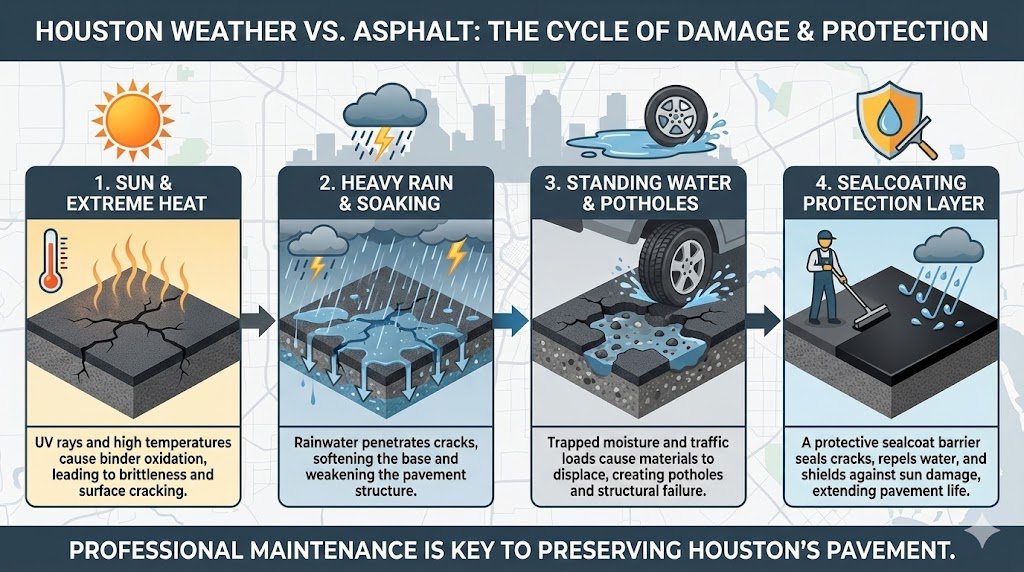
Why Houston Climate is Coughing on Asphalt.
Asphalt is pliable in nature. Such flexibility allows it to resist the traffic and climate variations. Nevertheless, repeated surface stress is caused by the weather in Houston.
These are the primary environmental conditions that cause asphalt weather degradation over time in Houston.
Extreme Heat and UV Exposure
The long and hot summers in Houston make the asphalt soft and swollen. The binder by which the pavement is held together is broken by constant exposure of ultraviolet.
What happens:
- Surface dries out and becomes brittle.
- The color becomes less dark black to gray.
- Split cracks start to appear on the hairline.
This is termed as oxidation and this is one of the most popular causes of early pavement aging.
Heavy Rain and High Humidity
Couple of rainfalls and dampness of air enable water to slip even when there are the tiniest cracks.
Water at the base layer causes a weakening of the foundation. In the long run, it results in weather damage of Houston asphalt which includes:
- potholes
- surface depressions
- loose edges
This problem is aggravated by poor drainage particularly around nondestructive parking lots and driveways.
Sudden Temperature Changes
Even though Houston is not always frozen, even fast alternations between hot days and cooler evenings have their impact on asphalt.
This is because the surface is bigger in the day and smaller at night. The repetitive motion gradually cracks and expands the already existing joints. These cracks form holes through which water and debris access.
Tropical Flooding and storms.
Extreme pressure on asphalt surfaces is caused by storm systems and periodical floods. Water that is standing increases erosion below the pavement resulting in irregular areas and structural breakdown.
This kind of weather-induced stress is one of the leading causes of the weather damage of the asphalt in Houston, particularly in low-lying regions.
Common Weather Problems vs. Asphalt Impact
| Weather Condition | Typical Effect on Asphalt | Long-Term Risk |
| Prolonged heat | Softening and oxidation | Cracking and raveling |
| Heavy rainfall | Water infiltration | Potholes and base failure |
| High humidity | Moisture retention | Mold growth in sublayers |
| Storm flooding | Subgrade erosion | Structural collapse |
Professional Asphalt & Parking Lot Services by LineWise Solutions
When it comes to enhancing the safety, appearance, and durability of commercial properties, LineWise Solutions offers reliable pavement and maintenance services you can trust. Specializing in high-quality parking lot striping, asphalt sealcoating, crack sealing, and exterior painting, LineWise Solutions uses industrial-grade materials and expert workmanship to deliver long-lasting results built for the Texas climate. Their team also helps ensure ADA compliance and a polished, professional look for your property’s exterior surfaces. Whether you’re planning preventative maintenance or updating your commercial space, LineWise Solutions combines experience and customer-focused service to protect and elevate your investment. Learn more at LineWiseSolutions
Red Flags You Cannot Afford to Overlook.
In case you would like to prevent the early Houston asphalt weather damage, you should pay attention to the following signs:
- little cracks upon the surface of the surface.
- shallow puddles after rain
- decaying curbs on driveways.
- faded or brittle texture
They are not cosmetic problems. They report that the pavement structure is becoming weaker.
How to take care of your Asphalt.
Luckily, with elementary maintenance, you can slow and in many cases prevent severe damage.
Sealcoating on a Routine Schedule.
Sealcoating provides a protective layer against the ultraviolet rays, moisture, oil spills and surface oxidation. The climate of Houston favors the sealcoating of most properties in every two-three years.
Prompt Crack Sealing
The water can enter the pavement base via small cracks. One of the most cost effective methods of curbing weather damage of asphalt in Houston is filling cracks at an early stage.
Improve Drainage
Ensure that the water moves out of your driveway or lot. Install clean drains, slopes (where available) and keep gutters clean to ensure that no water accumulates around the edges of asphalt.
Keep the Surface Clean
Moisture is caught up by dirt, leaves and standing debris. Frequent sweeping and washing eliminates moisture retention and retarded breakdown on the surface.
Preventive Inspections Schedule.
Before surface fatigue, movement of the base, and drainage problems become visible, they can be detected using professional inspection.
Final Thought
The climate of Houston is among the most demanding of pavements. Heat, rain, and storms are constantly undermining asphalt surfaces at the surface as well as the bottom. Through the knowledge of the way the asphalt weather damages build and the proactive measures that can be implemented at the initial stages in the form of the sealcoating, crack sealing, and drainage-system additions, you can significantly prolong the lifespan of your pavement and eliminate expensive total replacements.